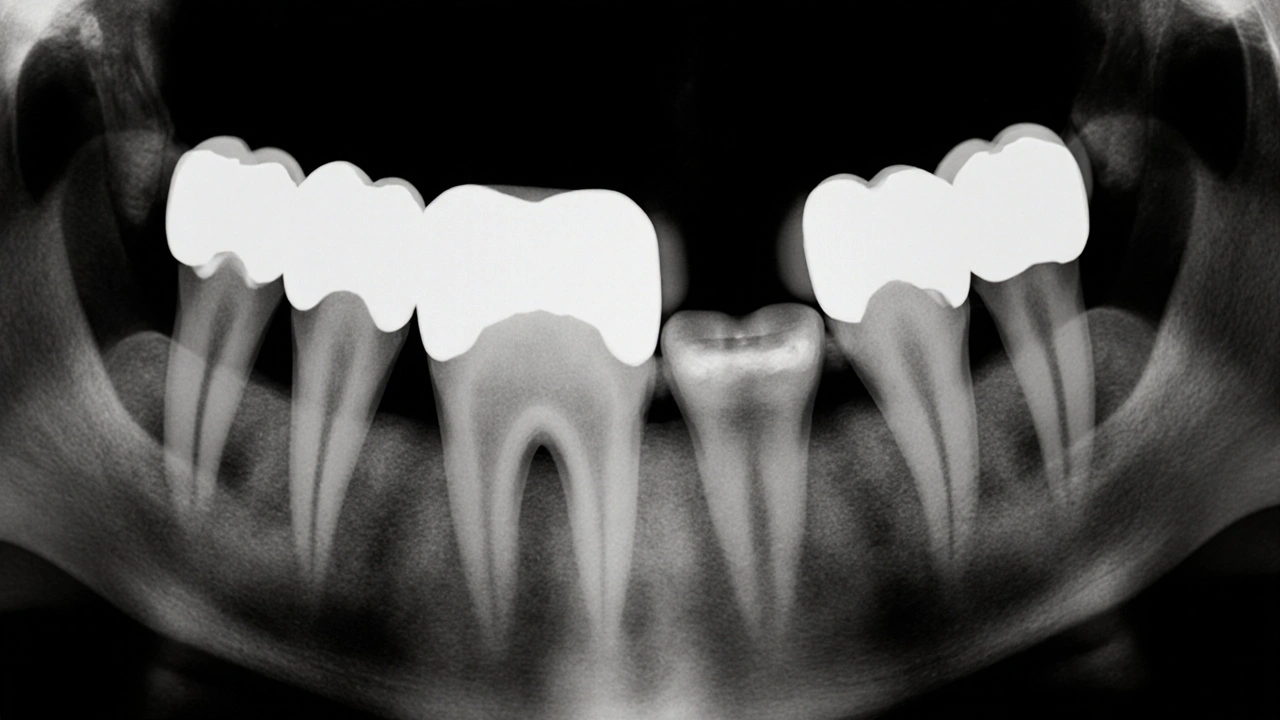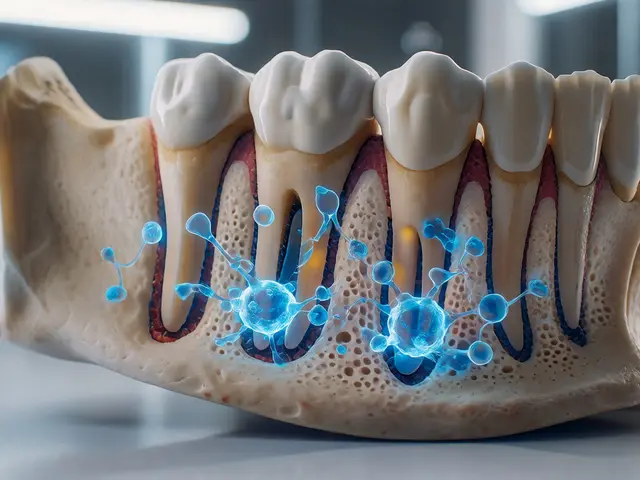
Jak vypadá kaz mezi zuby
When you think of tooth decay, you probably imagine a dark spot on the front of a tooth—but the real danger often hides kaz mezi zuby, zubní kaz, který vzniká v úzkém prostoru mezi dvěma zuby, kde štětěcín nedosáhne. This type of decay is silent, sneaky, and often painless until it’s too late. Unlike surface cavities, it doesn’t show up in the mirror. You won’t feel it when you bite down. And by the time you notice a bad taste or sensitivity, the damage might already be deep into the dentin—or worse, spreading to the neighboring tooth.
So what does it actually look like? Early-stage kaz mezi zuby, zubní kaz, který vzniká v mezizubních prostorech might just be a faint white or yellowish spot, barely visible even to a dentist without an X-ray. As it grows, it turns darker—brown, then black—and the enamel between the teeth starts to crumble. Think of it like rust inside a metal pipe: you don’t see it from the outside, but the structure is slowly falling apart. The real problem? It spreads sideways, eating through enamel and dentin until it hits the nerve of the adjacent tooth. That’s when pain hits—and suddenly, you’re facing a root canal or even two extracted teeth.
Why does this happen? Because most people brush their teeth but skip flossing—or do it wrong. Plaque builds up in those tight spaces, and bacteria feast on sugar left behind after meals. Over time, acid eats through the enamel. It’s not about being lazy—it’s about not knowing what to look for. You can’t see it. You can’t feel it. But your dentist can, if you go for regular checkups. And if you wait until it hurts? You’re already behind.
What you’ll find in the posts below are real, practical answers: how to spot early signs of kaz mezi zuby, zubní kaz mezi zuby, který se rozvíjí v mezizubních prostorech without an X-ray, what tools actually work (yes, even floss picks can help), and how to stop it before it costs you time, money, and a tooth. You’ll also learn what habits make it worse, what products to avoid, and how to protect not just one tooth, but both teeth next to it. This isn’t about perfect brushing—it’s about smart, targeted care.